
Wim Verellen
Accounting & IT
At Joenit since 1988.
- 1963
Wim was born in 1963 in the Flemish Kempen, into a baker's family, the sixth in a row of eight.

- 1975
At twelve he went to school at the Technisch Instituut in Zandhoven.
- 1977
At fourteen he was allowed to work in the bakery alongside his big brother. That was where he truly learned how important teamwork is.
- 1978
At the technical school he discovered that he loved making things: technical drawing, working metal on the lathe and the milling machine.
- 1979
In his last two years at the technical school he learned automation and pneumatics, and he loved that too. But 1979 was above all the year he met his Hilde: the beginning of a beautiful story. They are still together and have never once quarrelled.
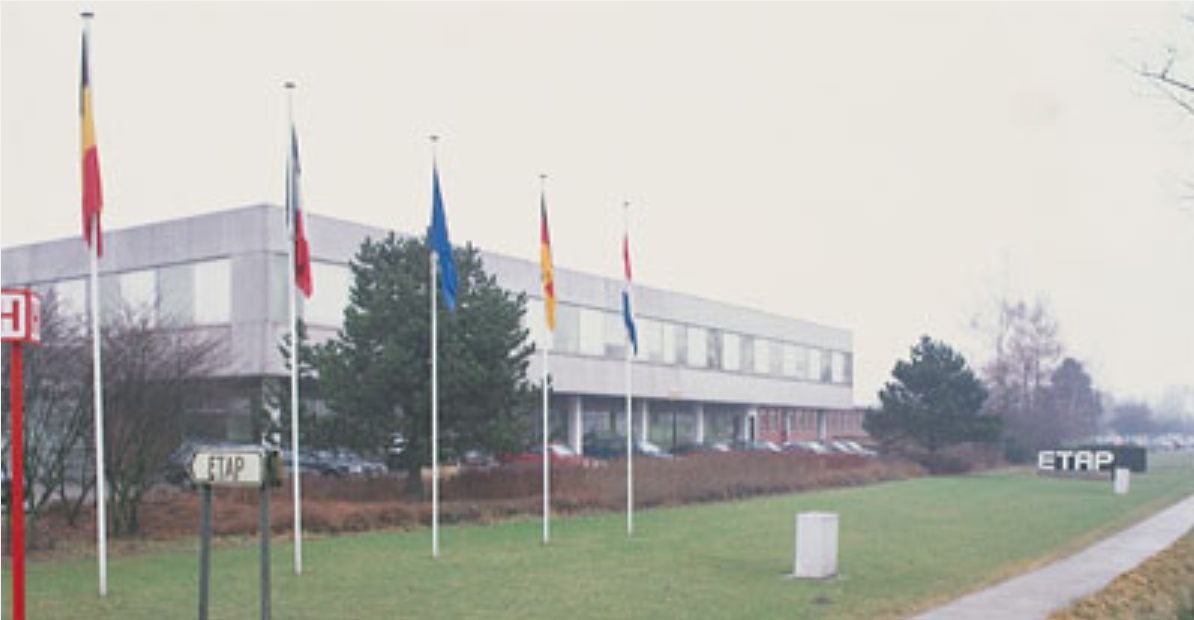
That same year his parents gave him his first music system, bought from Remy Gerardi of Geronika in Malle. Remy, who must have been twenty-six at the time, came round to their house to let Wim hear the set in his own bedroom. Wim found that incredible, who does such a thing. It was a fine Denon set with a Lenco turntable, cassette deck, radio tuner and a down-to-earth amplifier. His budget would not stretch to loudspeakers, so he bought the components himself. First in a shoebox, then at Etap he made a handsome wooden cabinet with a twelve inch woofer and a tweeter. It blasted away in his little room.
- 1980
His parents found work more interesting than school, and so in 1980 Wim went to his first job at the big Etap factory in Malle.
- 1981
At the factory he learned even more metalwork, and also precious metals, stainless steel, wood and plastics such as Ertalon and nylon, for the construction of small sailing yachts. A lovely time. In that same year he made his first radio programme of his own, when the first non-pirate free radio stations were permitted.
The factory wage went into the family purse. If you wanted pocket money, you had to do weekend work in the bakery: twenty hours over two days. With that money Wim took the bus to Antwerp, to a specialist record shop that sold only records from the US, a year before they reached the European market. He was a funk devotee, and blues. That was how he bought Michael Jackson's Thriller a year before it came out in Europe; his friends thought nothing of it. Once he had spent all his pocket money on records and there was not a penny left for the bus, so he walked the twenty-five kilometres home on foot, with his little bag of records.
- 1982
After his military service he went to evening school to train as an electronics engineer.
- 1984
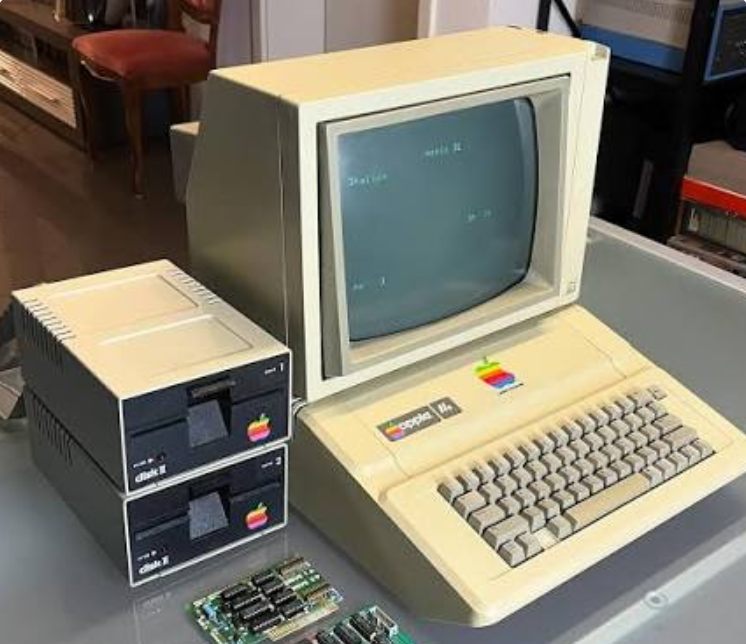
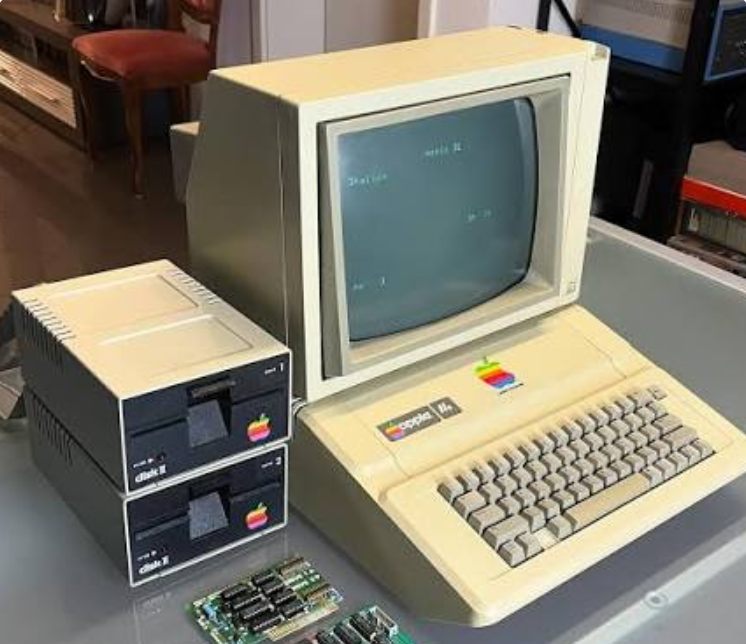
At Etap, still in the factory, he was given a role helping to design a lighting experience laboratory. The new era of computers, programming chips: he found it a thoroughly fascinating time.
- 1985
Naturally this couple in love had to get married one day. In 1985 the time came, and at last they had their own little house too.
- 1986
Back to Remy Gerardi, and not forgetting his wife May, of Geronika in Malle. With his heart in his mouth Wim went to ask them to help him start a business of his own, like theirs. He is still enormously grateful to them for it: without them, it would probably never have turned out this way. It was not a nudge in the back, it was laying the foundation for what Joenit has become.
- 1987
In 1987 Bram was born, their first son.
- 1988
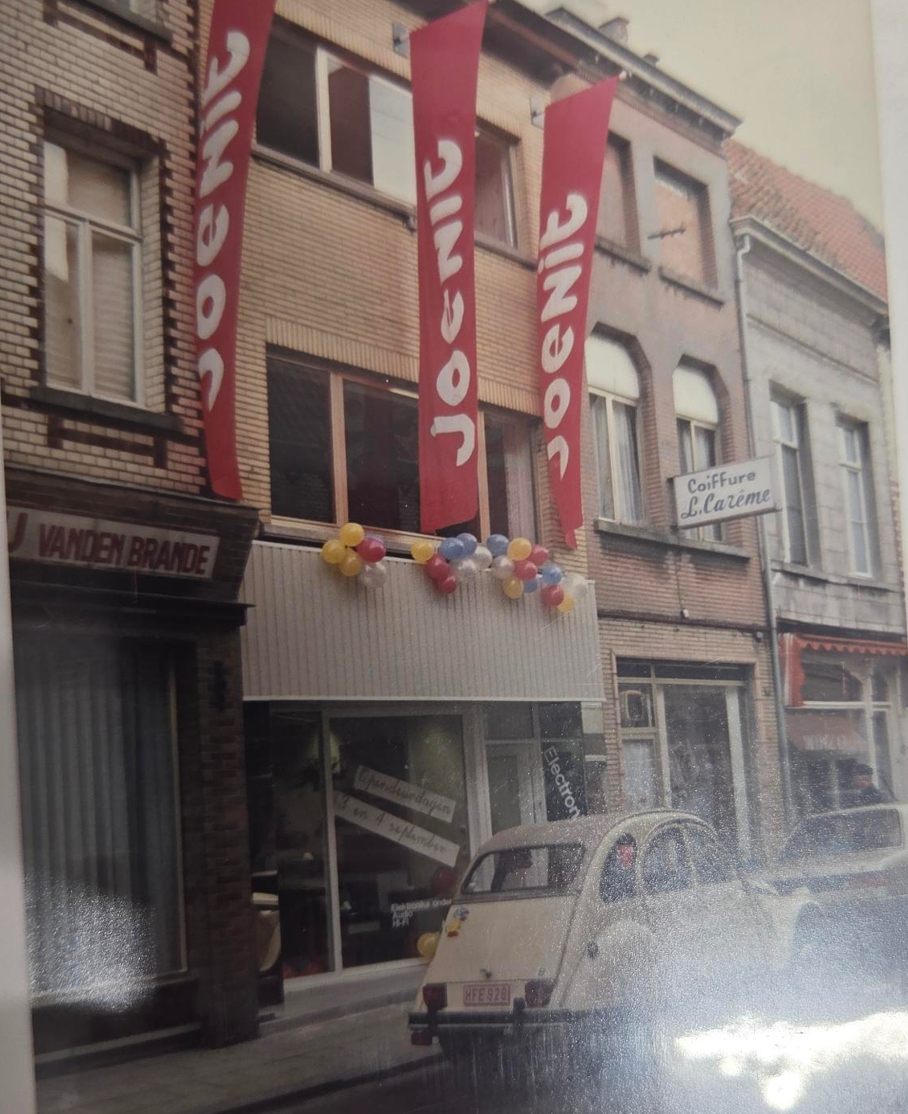
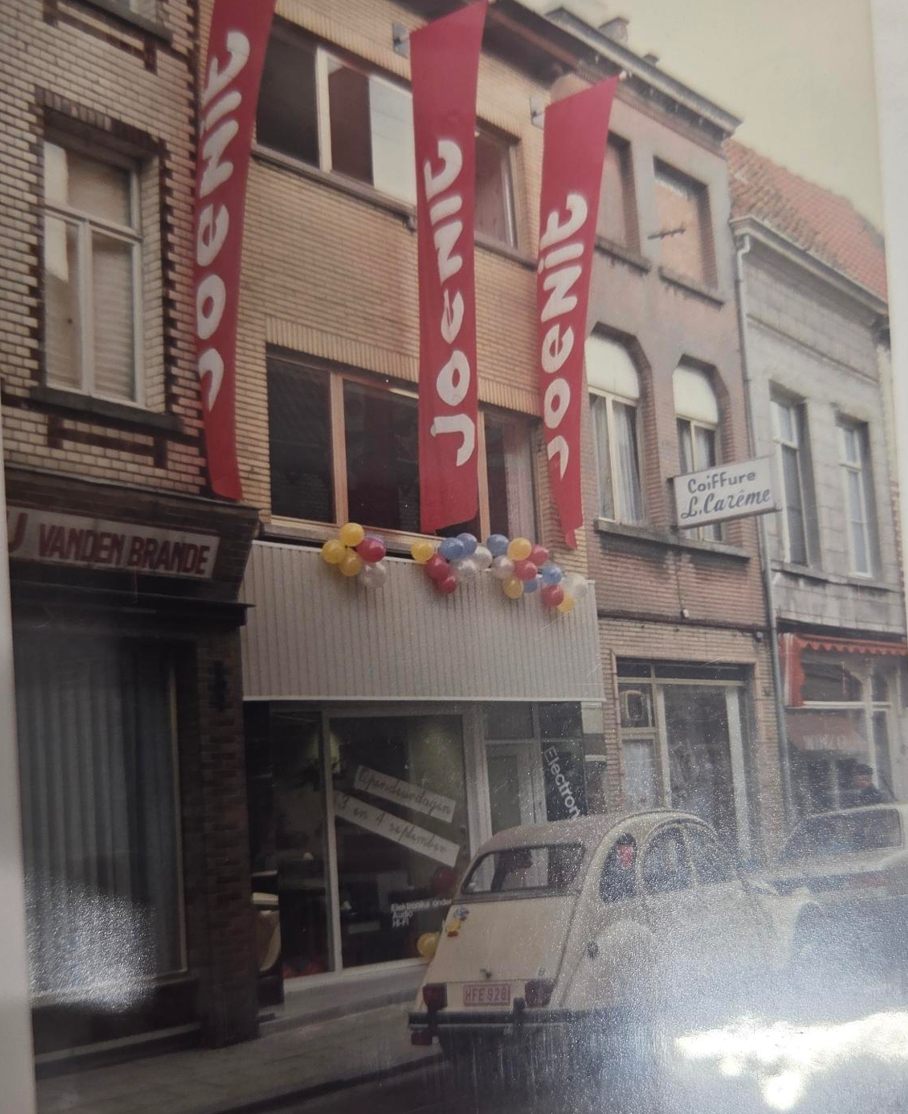
A year later came Sam, their great rascal. In that same year their shop Joenit opened: an electronics business with some twelve thousand different electronic components. Music had been important to Wim from a young age, so naturally the new shop had to have a few hi-fi sets in the showroom.
- 1989
Early on in the new business they were able to bring in big customers, such as Electrabel and the NMBS, the national railways. They also supplied the Dutch firm ACS, a supplier of printed circuit boards for Philips. The curious Wim had to know more about having circuit boards made and learned the first drawings. They likewise supplied electronic components to the nearby technical school in Mechelen, where Wim often drew electronic diagrams for teachers to give to their pupils.
- 1990
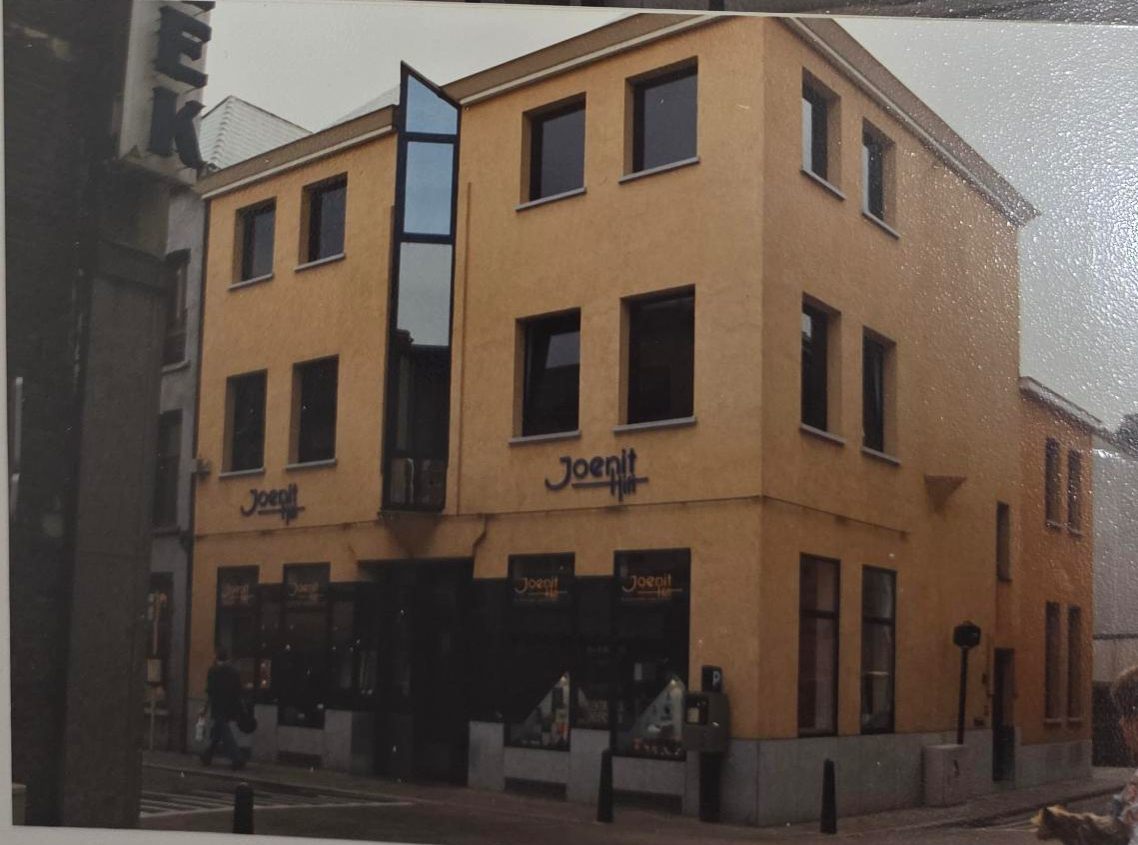
In 1990 Joenit built. The plans: a welcoming shop where amateurs and professionals alike would enjoy spending time buying electronic equipment. Not a hatch to pass things through, but a place where you like to be. And not forgetting the other half of the new building, to display their hobby that had got out of hand. Not only to display it, but, just like the lighting experience laboratory at Etap years before, a listening experience, with three listening rooms furnished as genuine living rooms. That way the customer could truly experience what a modest set had to offer compared with a full-grown one. The cellar would serve as a repair and development space. Really, they were building their own dream, to spend every day in it, in the hope that the customer would feel the same. It was also a financial gamble: they had to at least double their turnover compared with the little start-up. They quadrupled it.
- 1991
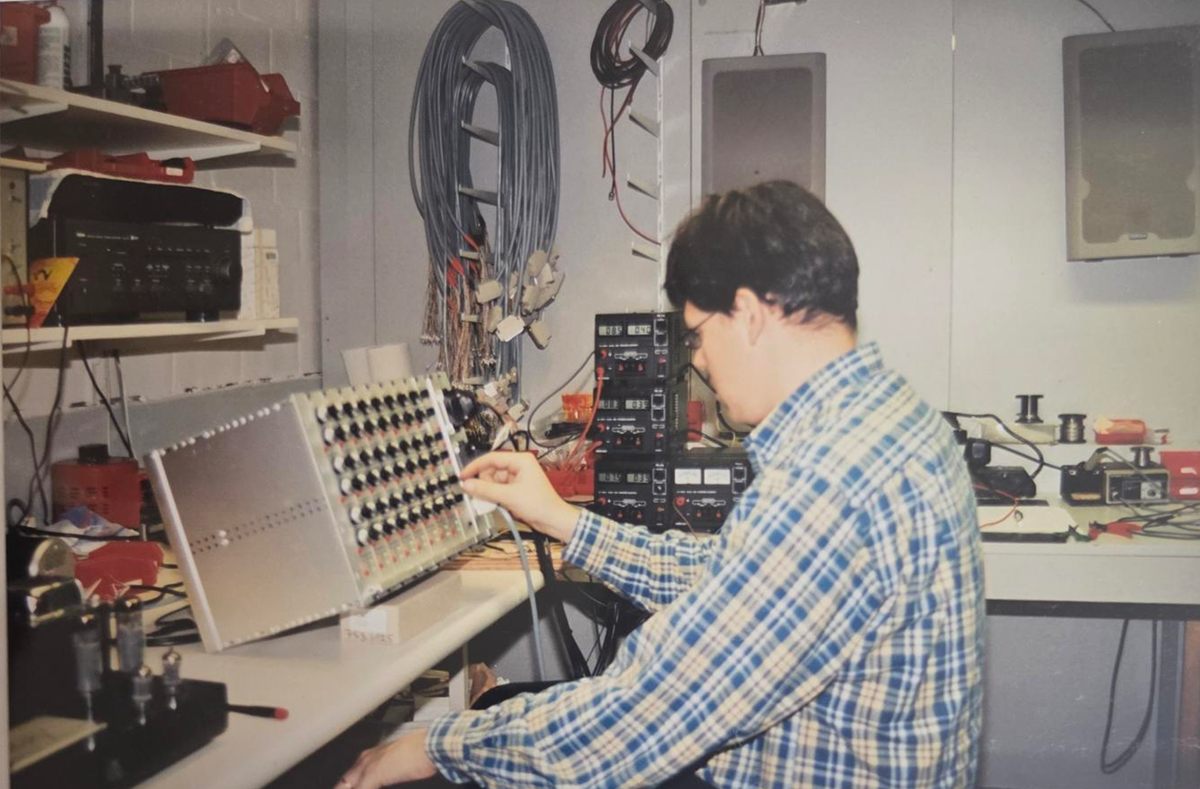
Joenit did not only supply, it was also often consulted for small subcontracted projects, such as cable locators or a mini PLC from their own drawing board. After making a prototype for the production of Pringles crisps for Procter & Gamble, to their astonishment an American delegation from Procter & Gamble suddenly stood on their doorstep. They wanted to put the machine Joenit had designed into service. Worldwide, all the Pringles machines were fitted with Joenit's machine, and the interfaces ran for at least fifteen years before being replaced by more modern versions. Those were exciting times.
- 1993
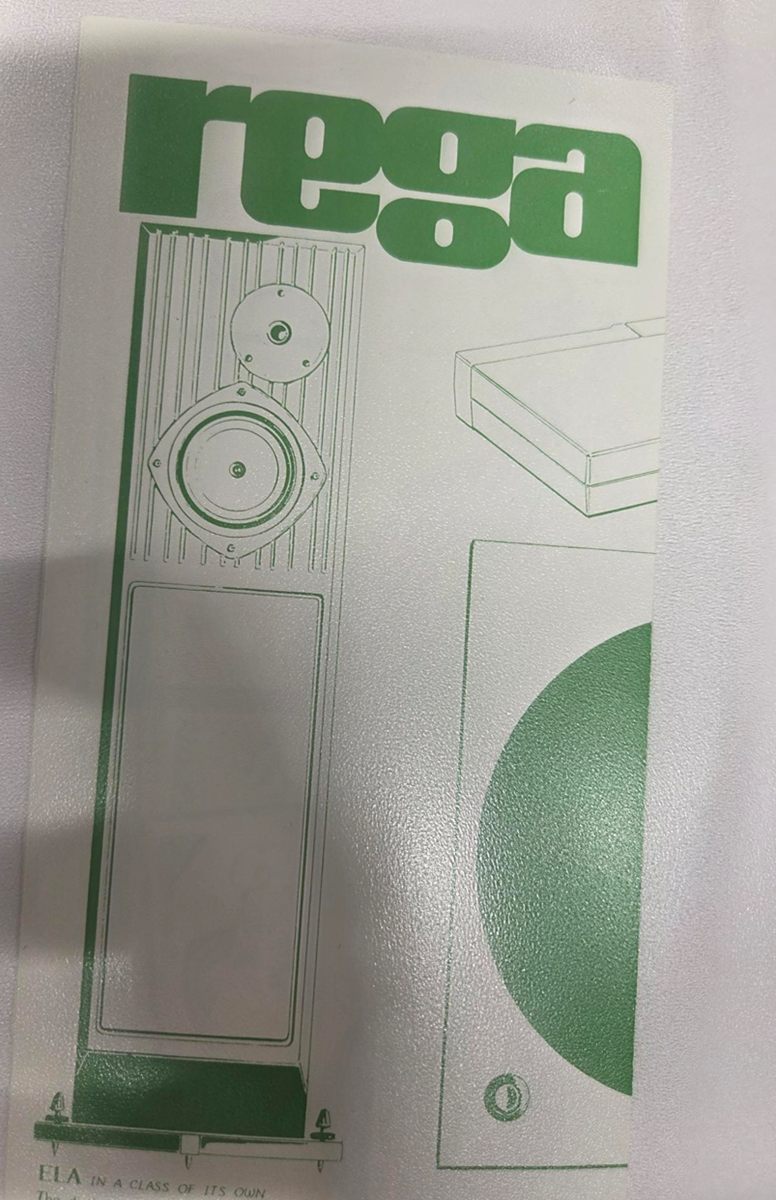
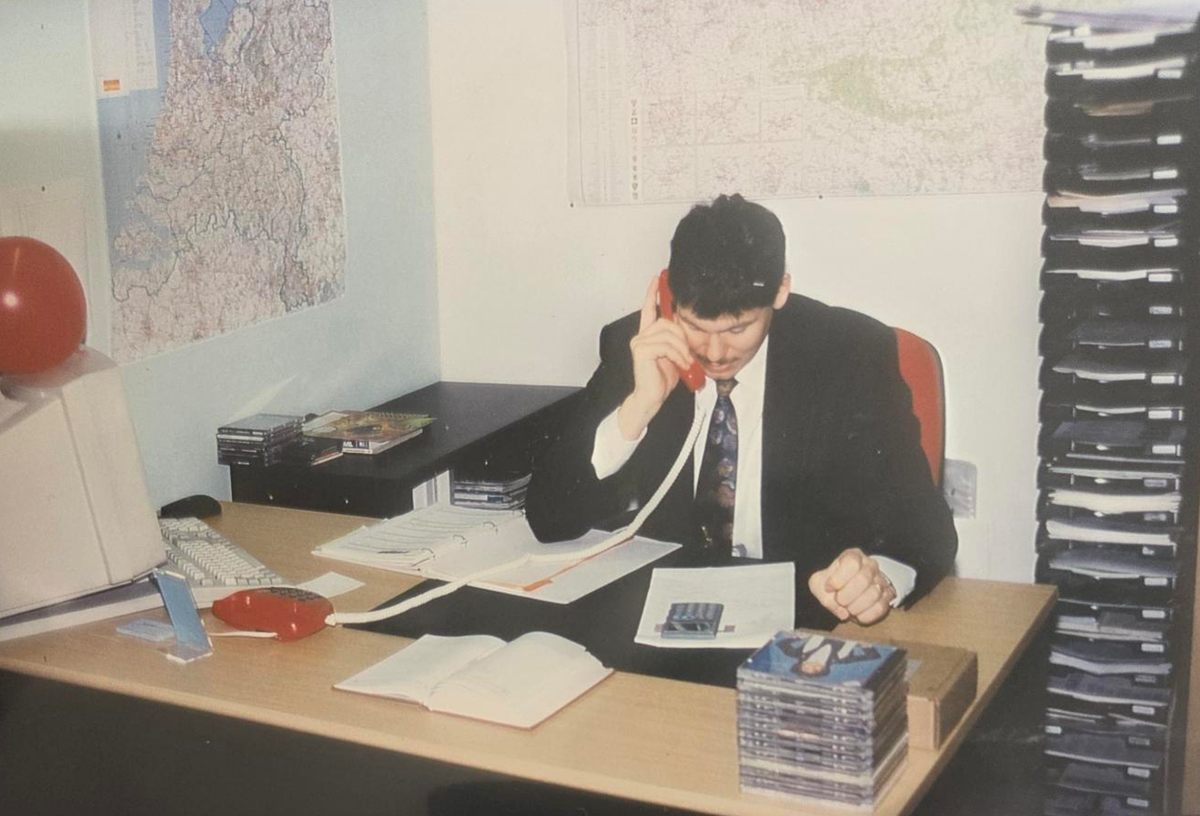
In 1993 the first Rega order came in. Within Joenit everyone was tremendously enthusiastic; they were bowled over by the musicality they heard in their own listening rooms. They had to explore the Benelux with Rega, a must: they wanted everyone to hear the musicality of these products.
- 1994
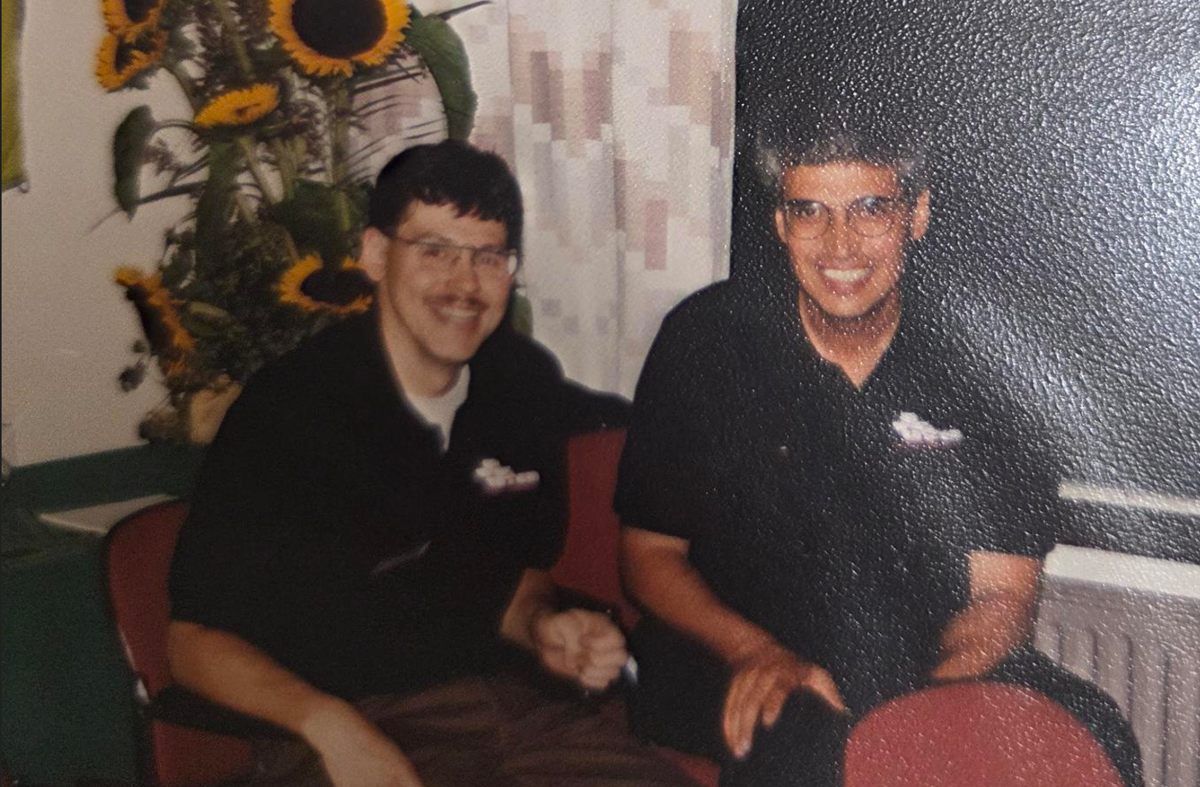
By now they were being invited by a Canadian distributor, a fellow Rega dealer, who wanted to introduce Wim to a remarkable product. For that, Wim and his friend and employee at the time, Kurt, went to Las Vegas, to CES, the hi-fi show, the biggest in the world. Wim himself did not speak a word of English; fortunately Kurt spoke it fluently.
They wandered through the first aisles, amazed at all that hi-fi firepower. Suddenly Wim's attention was caught by a room from which a remarkable sound was coming. The man in charge spoke with great passion about his amplifiers, Moon by Celeste, a Canadian start-up making fine products. But the loudspeakers, they sang music. Later he would understand what he had been listening to. An hour and a great deal of hi-fi firepower later he came into a small room, and there was that magic again. This time a small, simple Quad set and a small pair of loudspeakers with a handwritten card, "no Subwoofer". Funny, because how could such small speakers fill that room like that, with so much musicality?
And there stood the maker, fidgeting with his fingers. They understood each other at once, without a single word, which was not difficult, because Wim did not speak his language. Vince Bruzzese of Totem Acoustic, the man who would change Wim's life for a while. And the room of an hour earlier, Vince told Kurt, those had been Totem loudspeakers too. Wim's heart already knew. They placed their first order: four models, the Model One, the Mani-2, the Rokk and the brand-new Mite. When the Totems arrived in Belgium and they could listen to them in their own listening rooms, everything fell into place. With the new Regas, the Elicit amplifier, the Rega turntable. Music. Emotion.
- 1996
- 1997
In 1997 Wim developed a fully fledged ERP system, commissioned by the Dutch firm ACS. It was installed at Joenit as well.
- 1998
Writing programmes on the computer, programming chips, designing printed circuit boards, assembly: that was the soul of Joenit. Various projects were delivered to industry in Mechelen and far beyond.
- 1999
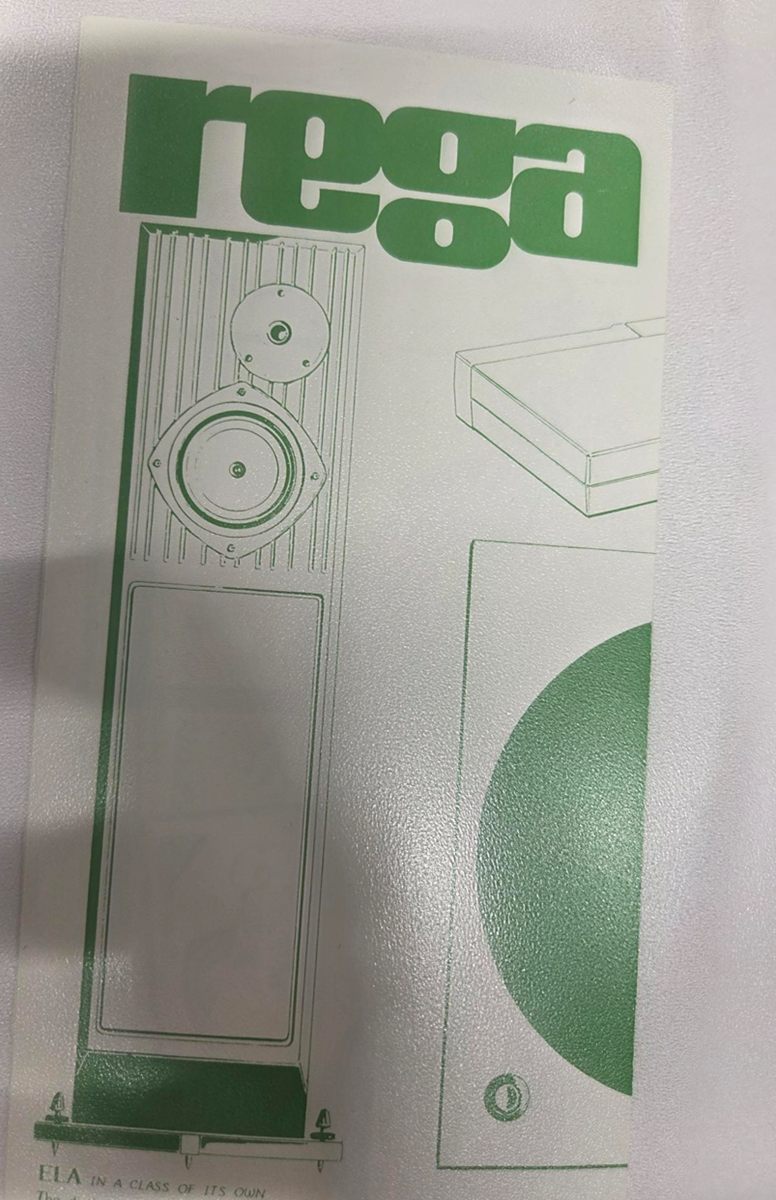
Creative soul that he is, Wim made brochures for Rega and Totem. He turned Hilde's talent for photography into something tangible, so that future customers could discover their musical products. Their creations went down so well that they received orders for the brochures from all over the world. What finer compliment is there.
- 2000
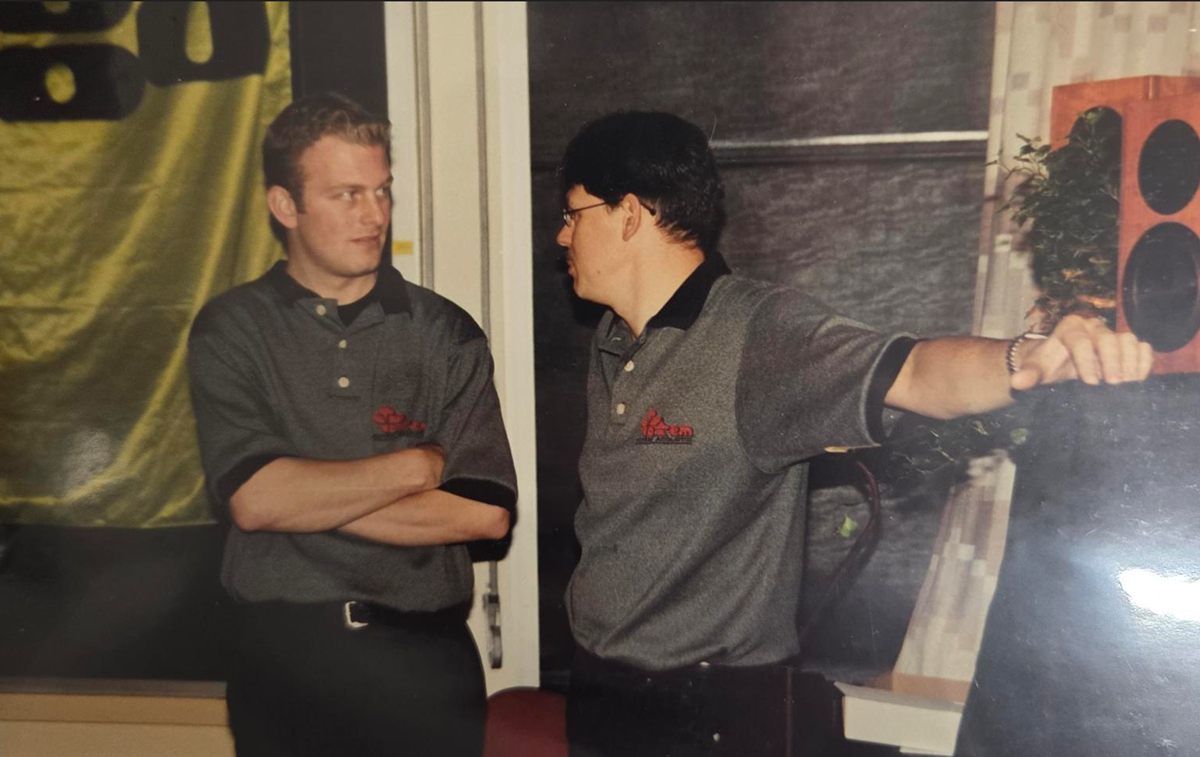
Gradually the building on Sint-Katelijnestraat was bursting at the seams. Even the listening rooms had to give way to stacked boxes. That year a young Dutchman came to see Wim; he so badly wanted to come and work for them. Wim could not get past the enthusiasm of Martijn Lavrijsen. He gave him complete freedom to serve the Dutch market, and Martijn had talent to spare. He became the bridge between Flemish and Dutch culture, and so Joenit became very successful in the Netherlands.
- 2001
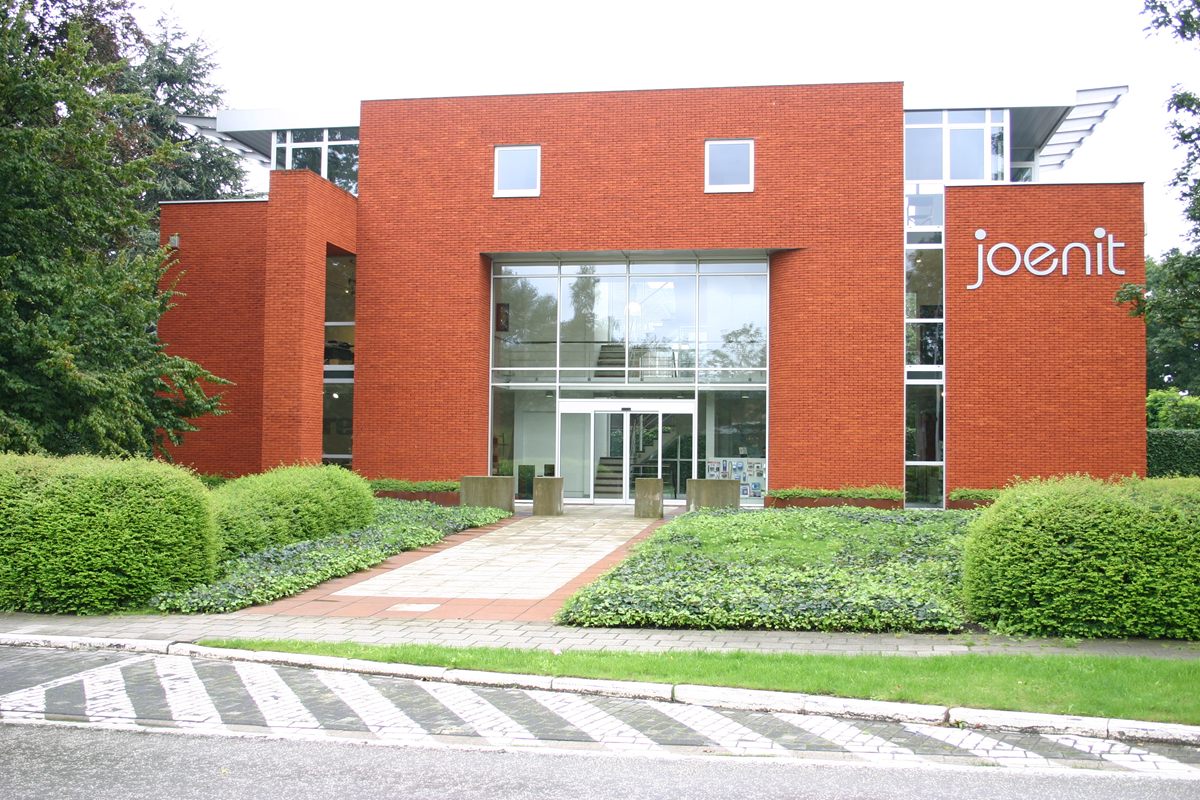
In 2001 a new creation followed, this time the current building on Brusselsesteenweg. For the design they received a nomination from the city of Mechelen.
- 2002
Hi-fi shows followed in the Netherlands, London, Scotland and Bristol, each time with glowing words from the visitors. They were different: no blah blah, but a demo where music was played and emotion had the upper hand. Simple: "ça se touche, ou pas". Martijn and Wim had a whale of a time, like two brothers on a day out. Above all they enjoyed the many styles of music they played, where so often a tinkly hi-fi jingle was the norm. Jimi Hendrix was a regular, as was the latest hip-hop or techno record Wim had secretly borrowed from Sam.
- 2003
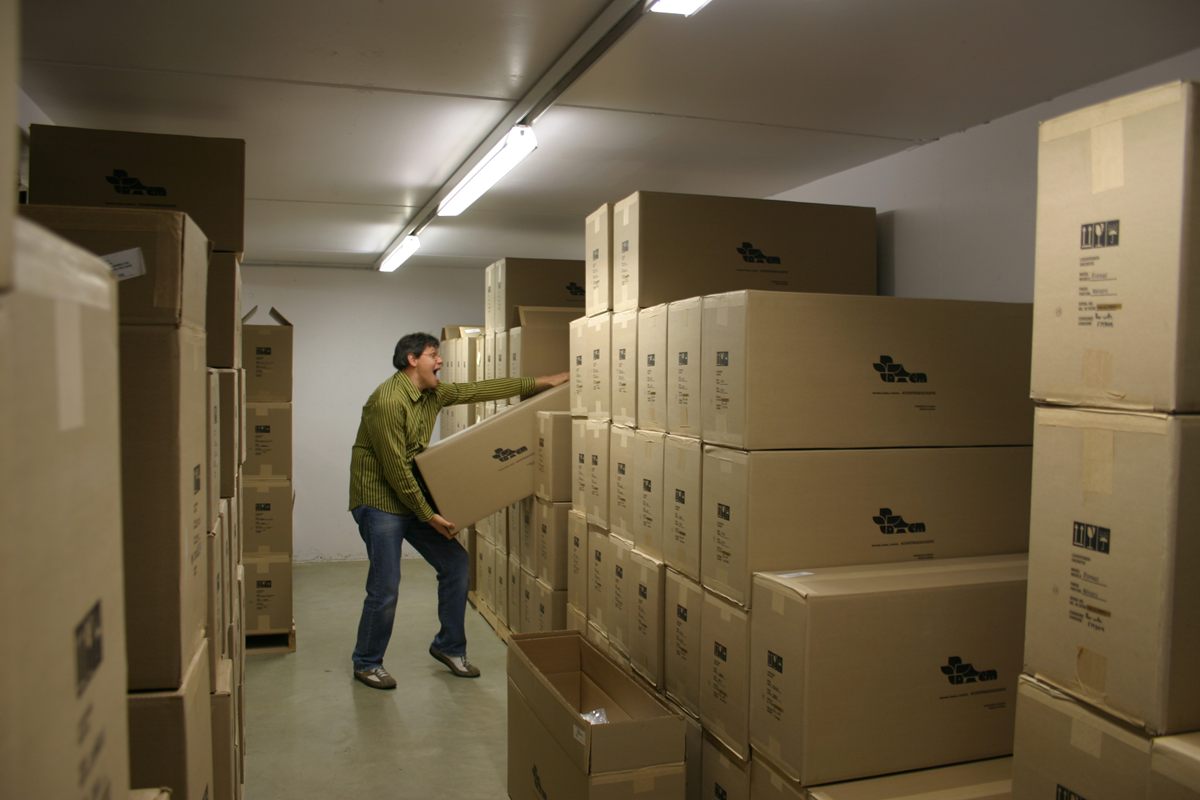
For many shows they asked for the support of Roy Gandy of Rega, Vince Bruzzese of Totem, Peter Partington and others. The visitor numbers kept on rising. They changed nothing, they simply stayed themselves. That was enough to stand out.
- 2005
In 2005 the British firm The Chord Company crossed their path, a maker of handmade cables that fitted their portfolio exactly. It was self-evident: a self-made northern girl who had soldered cables at a kitchen table in the south of England for the great Naim, and who had grown the company with great passion into a modern and idiosyncratic whole. The stories of Nigel Finn were so wild they had to be true. Using these cables in their sets resulted in an even finer sound. As an engineer Wim knows that the materials throughout the whole set matter: not just the toroidal transformer or the best tweeter, no, from the wall socket to the ears everything counts. And Sally's cables fitted in perfectly.
2005 was also the year Bram turned eighteen. He saw his father repairing an amplifier and told him for the first time that it seemed like something he would enjoy doing. Bram preferred to come and work with them rather than continue his architecture studies, a pity really, because he has a great deal of talent for it. But Wim knew well enough that entrepreneurship ran in his blood. He simply sent him out on the road with a little case of Chord cables: off you go with that. Young lads like that must find their own way in the end; you can only guide them and stand by them where needed. And young Bram had success with it too. As a father, that makes you proud.
- 2006
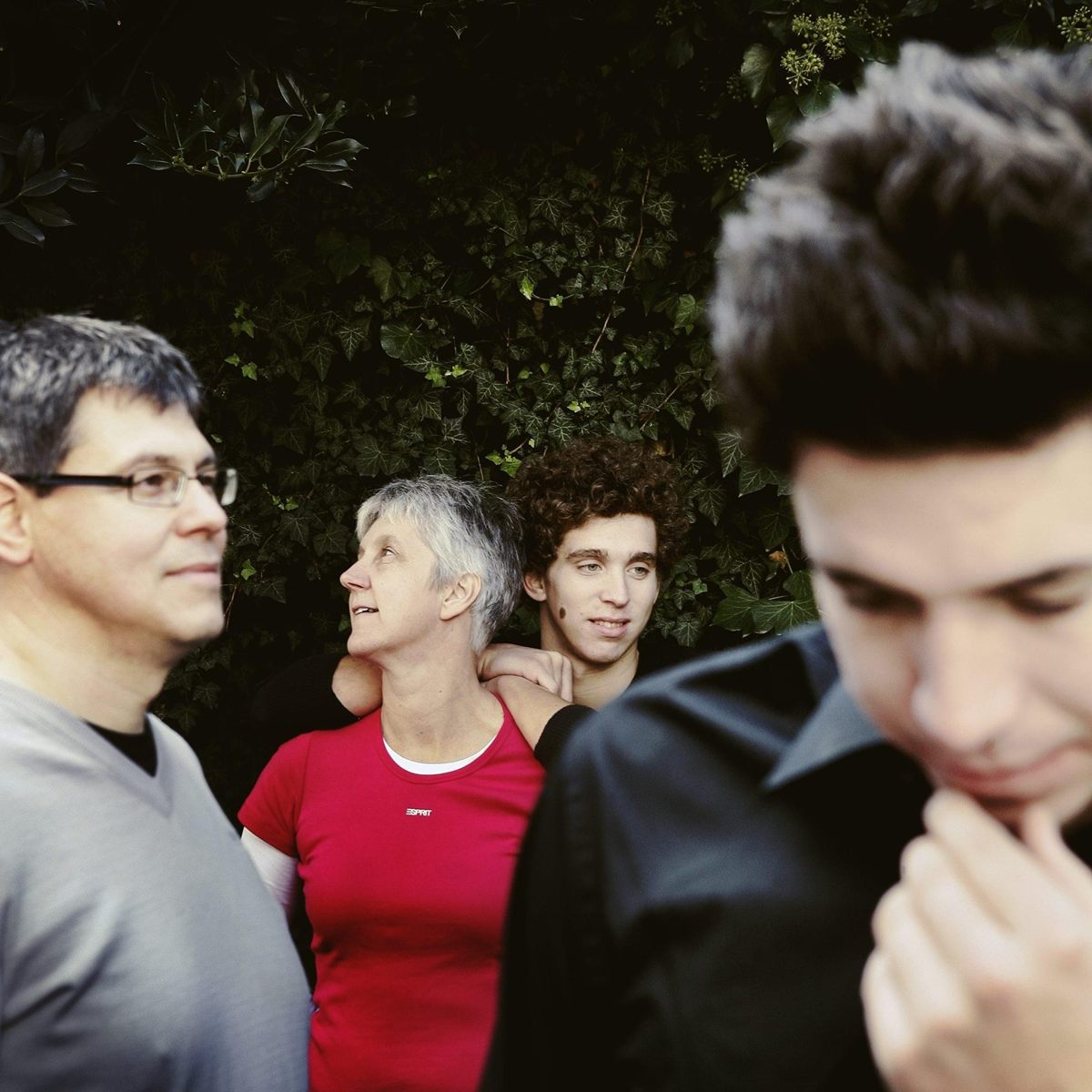
Brother Sam had also had enough of school, and so had his parents. Every year he had tried a different course; he simply liked being at school, what he learned there was of secondary importance. So Hilde and Wim gave him, just like his brother, a chance. Go and make a new website, here is a book, a desk, a computer, and sort it out. Work it out for yourself. Sam had his own idiosyncratic idea and of course was allowed to prove it. The result was very fine and excellent for Joenit.
- 2007
In 2007 the valve amplifiers of Einstein came their way. Beautiful things, and a beautiful friendship with the makers, Volker and Annette. That led to Wim developing a DAC himself. He had some time to bring his old passion for electronics back to the surface. With a Sony transport, a DAC and, while he was at it, a sturdy amplifier, he made an all-in-one device, all in prototype. He even found a London company to build a digital streamer into it. He let friendly colleagues hear the prototype, and everyone who heard it wanted him to carry on. The birth of beChocolate.
- 2008
Twenty years of Joenit. What a rollercoaster it had already been. That year was also a turning point in Wim's life: the crossroads where his creativity, his engineering, electronics, mechanics and software and his love of music came together, and beChocolate saw the light of day. He became so absorbed in his work that for six months he worked twenty hours a day, seven days a week, non-stop. After the presentation at their anniversary, Wim cracked after all. A burn-out. What now?
And there was Hilde, his shadow. She took the whole company on her shoulders. Naturally, because the mathematical formula read H + W = Joenit. So for a while, for two years, it became H = Joenit.
- 2009
Wim recovered. He read a great many books: philosophy, religions, yoga, mindfulness. Thanks to Hilde he was given that time. With a little notebook and an old fountain pen he sat on a bench in the city centre writing down what everything really comes down to. During a holiday in the French department of Jura, Hilde and he took a decision: they would give Bram and Sam more room to breathe. They asked their grown-up nephew Peter Verellen to strengthen the company, and the idea grew of setting up a new office in France and so creating a physical distance.
- 2011
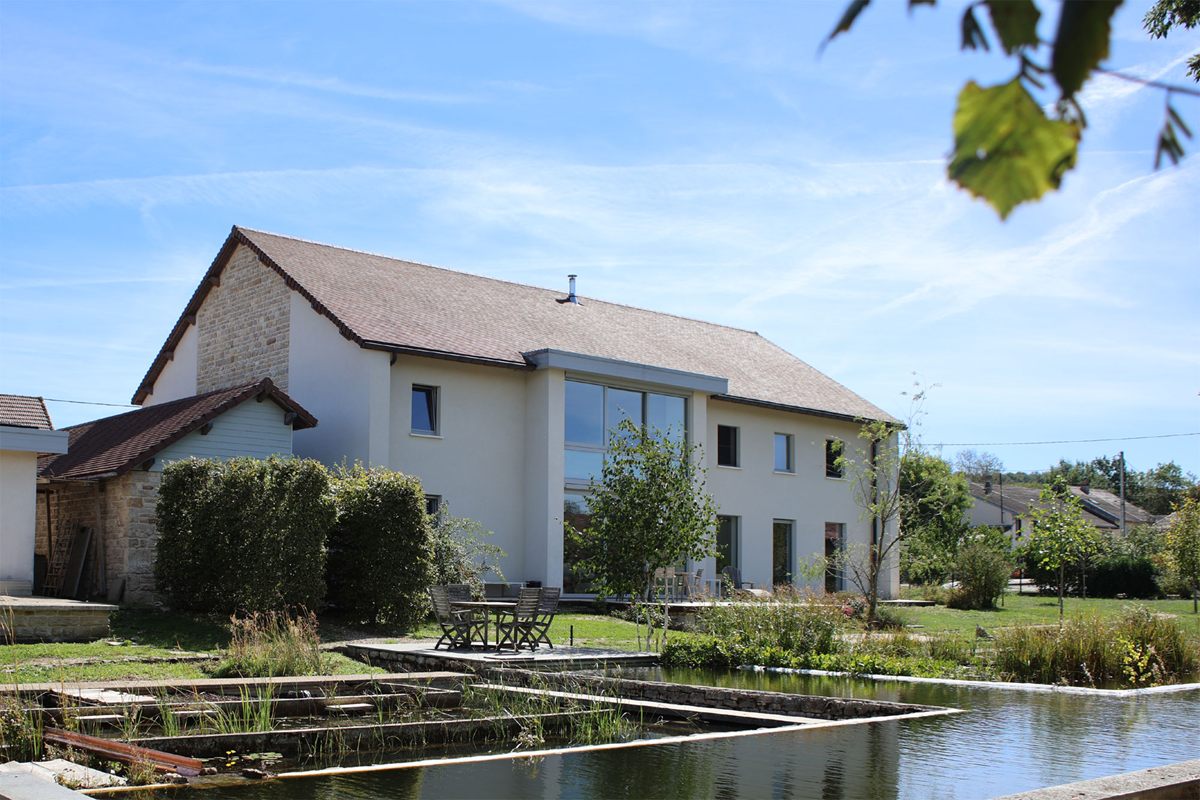
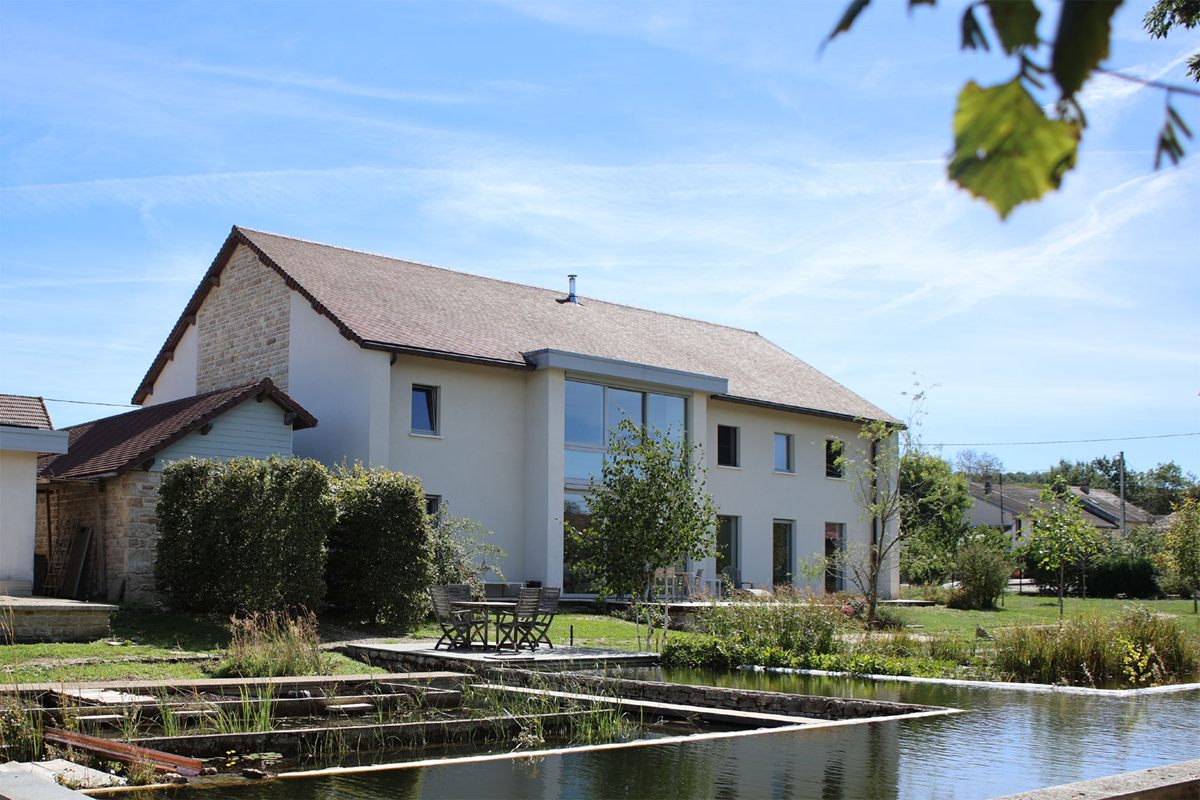
In 2011 a new challenge awaited, creativity again, a building again. This time office, storage, laboratories and a cosy welcome for the hi-fi dealers among their customers. The building had to blend into the typical, age-old architecture of the stone farmhouses of the Jura, with a large garden and a natural pond. That same year they sadly had to bow to politics: another distributor wanted the Chord cable brand. The Chord cable family will nonetheless always remain part of their story.
- 2012
After three years of planning, Hilde and Wim moved to the Jura in 2012. The company was now in good hands with Peter, Bram, Sam and a young Brit, Phill. In the wake of his burn-out, Wim decided to build everything himself. They bought a small jack-of-all-trades of a tractor, a tractopelle in French. They bought a ruin and took it down stone by stone by hand. No big machines, but a fifty-year-old crane twenty metres high, and plenty of appetite for it. The cellar first, naturally. Vaulted, naturally.
- 2013
In 2013 the foundations were laid. It became a passive house with clever ideas that make it eco-friendly: solar tubes that heat three thousand litres of water to flow through the whole building as central heating, helped in winter by a high-efficiency wood stove on the same buffer tanks, and electric solar panels with batteries that make the whole thing virtually passive in energy.
- 2022
- 2025
By now Wim is grandfather to four rascals who often stay with them. That makes him happy: the passing on of knowledge and daring, making your own life, because we are only on this planet for a short while. Though a life carries on through the children and the grandchildren. Life is beautiful.
- 2026
Software is in Wim's blood. Peppol invoicing led to the more than thirty-year-old ERP system being replaced by a programme in C#, with a portal for customers and a completely new, extensive website, AI-ready. The new system for administration and stock management means that Bram and Sam can focus as fully as possible on customer service. The paperwork is fully automated, so that the small team can give the dealers the greatest possible support and deal with consumers personally. So no, Wim is not retired in the south of France. Retirement is for old people, and he is not that yet.